What does it take to turn a hemp stalk growing in a Minnesota field into a high-density hemp fiber acoustic panel? At Green Fox Manufacturing, the process connects agriculture, fiber processing, nonwoven manufacturing, and hands-on finishing. By working with hemp from our own fields and manufacturing fiber-based materials in-house, we bring multiple stages of the production process together under one roof.
The result is a high-density hemp fiber panel designed specifically for superior acoustic performance, backed by a team that understands the journey from raw material to finished product. Here’s a closer look at how our hemp fiber acoustic panels come to life.
IT STARTS IN OUR MINNESOTA FIELDS
Before our hemp fiber reaches the manufacturing floor, it starts as a seed in the fields of our 5th generation farm. As part of the Green Fox Companies family, our operations connect farming with material processing and manufacturing. Hemp grown in our Minnesota fields provides a starting point for exploring how agricultural fibers can be transformed into functional, high performing products.
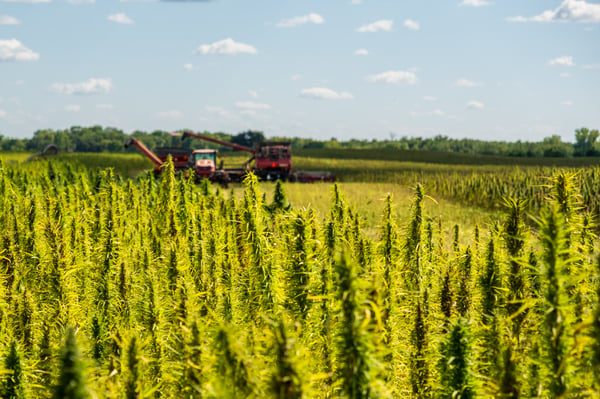
Once the hemp is harvested, the stalks get brought to our nonwoven manufacturing facility just down the road. This connection between agriculture and manufacturing helps us maintain a close relationship with the materials we work with and gives our partners greater visibility into the supply chain.
PREPARING HEMP FIBER FOR MANUFACTURING
Raw hemp stalks cannot go directly into a finished acoustic panel. The material must first be processed into a form that can be used in manufacturing. At Green Fox Manufacturing, we process hemp fiber through a process called decortication. This is where the hemp hurd (woody core of the hemp stalk) is separated from the hemp fiber.
Fiber preparation is an important step in the journey as the characteristics of the hemp fiber greatly influence how it behaves during manufacturing and how it contributes to the performance properties of the finished panel.
Once the hemp fiber is separated and prepared for production, it can move into the next stage of the process: nonwoven manufacturing.
FROM LOOSE FIBER TO A HIGH-DENSITY NONWOVEN PANEL
This is where our Cormatex airlay nonwoven line becomes part of the story. Airlay nonwoven manufacturing uses airflow to distribute loose fibers into uniform web structures. This creates the foundation for developing nonwoven materials with characteristics tailored to their intended applications.
For our high-density hemp fiber acoustic panels, the manufacturing process transforms the hemp fiber into a panel format that can be used in acoustic and sound management applications.
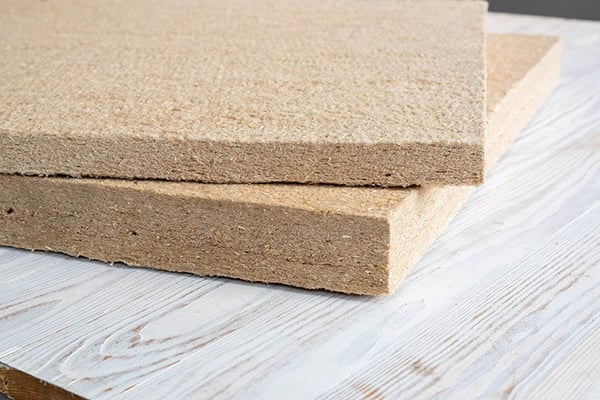
Our manufacturing capabilities give us a platform for working with natural fibers, like hemp, to develop nonwoven materials that deliver acoustic performance comparable to or exceeding traditional fiberglass-core panels. We can also engineer to meet stringent fire performance requirements, including a Class A fire rating.
FROM THE MANUFACTURING LINE TO THE FINISHED PANEL
The process doesn't end when material comes off the line. Once the panels are produced, our team takes over the next stage of the work. Panels are handled, cut, and prepared to meet the needs of the finished product.
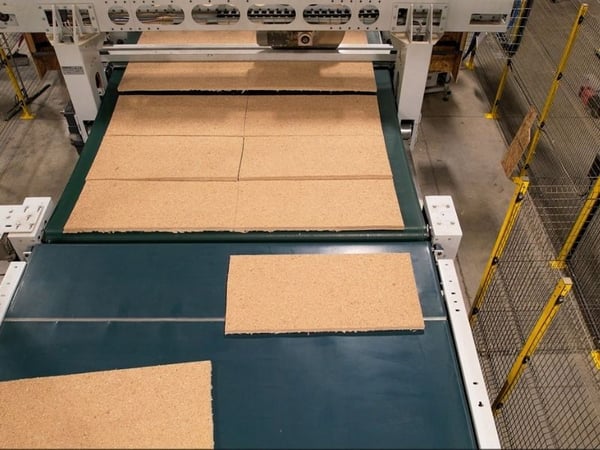
This hands-on stage is an important part of turning manufactured material into a usable component. The panels must be managed through the finishing process, with attention to the dimensions and specifications required for their intended application.
Our team plays a direct role in moving the material from production to its finished form. It's a practical example of how manufacturing involves more than equipment alone. And the people working with the material are an essential part of our process.
SUPPORTING ACOUSTIC APPLICATIONS WITH NATURAL FIBER MATERIALS
High-density hemp fiber panels offer another example of how natural fibers can be used to develop materials for industrial and commercial applications. For businesses exploring alternatives to conventional panel materials, hemp fiber presents an opportunity to incorporate an agricultural fiber into a high performing acoustic product.
The right material depends on the intended use and the performance requirements of the project. Density, thickness, rigidity, weight, and other specifications should be evaluated based on the application rather than assumed to be the same for every panel.
At Green Fox Manufacturing, we work with natural and cellulose-based fibers to support the development of custom nonwoven materials. Our capabilities provide a starting point for conversations about fiber selection, material specifications, and manufacturing requirements.
Whether you're developing an acoustic component or exploring a new application using natural fibers, understanding how a material is produced is an important part of choosing the right manufacturing partner.
CONNECTING THE FIELD TO THE FACTORY
Our high-density hemp fiber acoustic panels represent more than a finished product. They demonstrate the connection between agricultural materials, nonwoven manufacturing, and the people who bring each stage together.
From hemp growing in our Minnesota fields to material coming off our Cormatex line and being cut and handled by our team, the process reflects our unique approach to manufacturing: working with natural fibers and turning them into materials designed for real-world applications.
For businesses exploring custom, hemp fiber panels or natural fiber nonwoven manufacturing, we’re here to support your project.