
Hemp hurd is the woody core of the industrial hemp stalk. It makes up around 70% of the plant’s biomass and is naturally porous, high in cellulose, and lightweight. That combination gives manufacturers an absorbent, stable, and renewable feedstock that can replace wood, foam, and some plastics in targeted applications.
HEMP HURD AS A POWERFUL MANUFACTURING MATERIAL
Here at Green Fox Manufacturing, hemp hurd is not a byproduct, it is a primary building block. Research shows hemp shiv (hurd) contains roughly 35–45% cellulose and significant lignin, which gives it a “mini wood chip” performance profile with a much shorter growing cycle. Recent reviews of hemp-based particleboard and fiberboard show hemp can partially or fully replace wood while delivering competitive mechanical strength and improved hygrothermal behavior for building materials. In other words, hurd can carry real structural and functional load, not just marketing claims.
For designers, product developers, and operations leaders, the pain point usually isn’t the concept of industrial hemp. It’s consistency and manufacturability. You may know you want to reduce plastics or virgin wood, but you still need a material that runs reliably through your line and meets tight specs. That’s where pairing the right fiber characteristics with the right nonwoven process matters. By starting with high-quality, traceable hemp from our Minnesota family farm and blending it with other natural fibers, we help partners get repeatable basis weights, density, and absorbency. Which are the building blocks of a manufacturable product.
HOW GREEN FOX MANUFACTURING PROCESSES HEMP
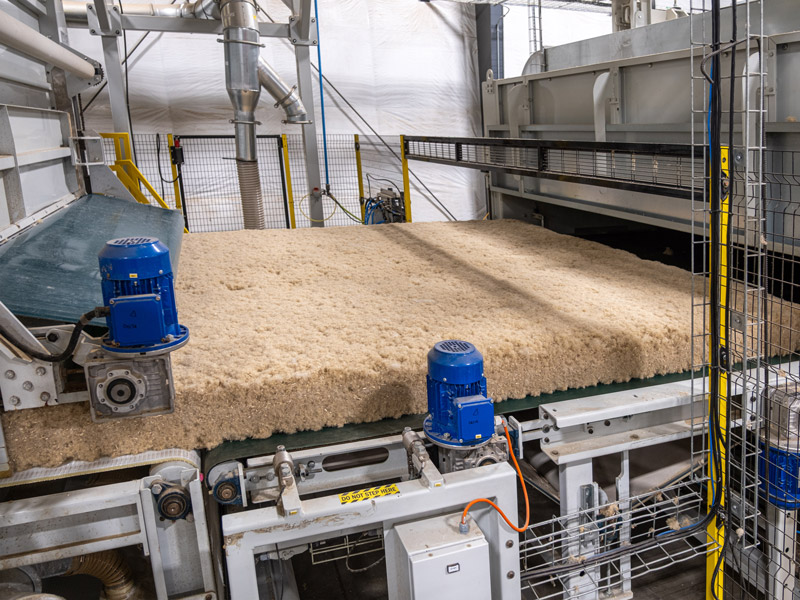
At Green Fox Manufacturing, our role is to turn raw hemp and other natural fibers into engineered, production-ready nonwoven mats, pads, and panels. We do that through decortication, a process that separates the hemp hurd and the hemp fiber. Our hemp fiber is then ran on our Cormatex airlay nonwoven line in Kimball, Minnesota, using aerodynamic web formation to distribute fibers evenly before bonding and converting.
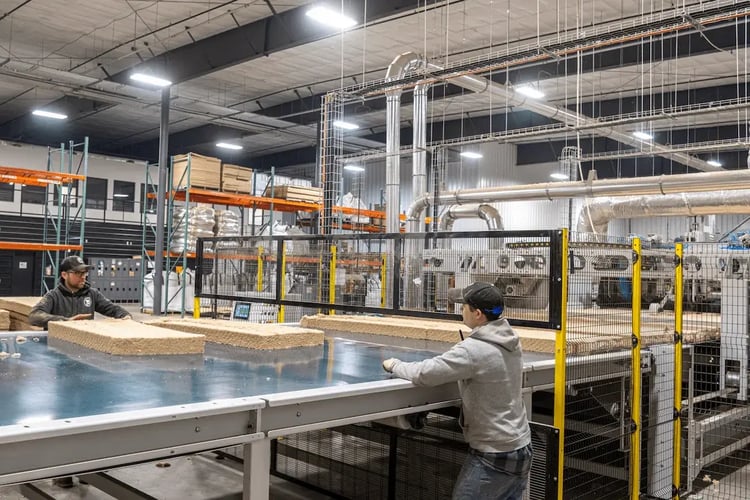
With this airlay technology, we can take hemp, flax, cellulose, recycled fibers, or custom fiber blends and form a controlled web with defined thickness, density, and mechanical performance. Our line handles coarse and irregular particles better than many traditional carding approaches, which makes it especially well-suited to hemp fiber blends. For example, we can build a mat that targets a specific absorption rate for animal bedding, or a panel with defined airflow resistivity for acoustic performance.
Because we are vertically integrated, we source hemp and other natural fibers from our own farm, Rookie Farmers. That gives us visibility into planting practices, harvest timing, decortication, and storage which all influence dust level, moisture, and fiber length. By controlling these airlay nonwoven line variables, we help reduce common headaches like web breaks, inconsistent thickness, or excessive fines.
.jpg?width=800&height=600&name=industrial%20hemp%20harvest%20(2).jpg)
HEMP SOLUTIONS FOR ANIMAL CARE AND NESTING PRODUCTS
One of the clearest use cases for hemp hurd today is animal care and nesting. Hurd’s natural porosity allows it to absorb roughly 4–5 times its weight in moisture, significantly outperforming many traditional bedding materials like straw or wood shavings in real barns and small-animal setups.
From a manufacturing standpoint, we use airlay technology to turn loose hurd and fibers into structured mats and pads that perform consistently. For example, a poultry nesting pad needs a soft but supportive surface, strong edge integrity for automated placement, and good liquid uptake. By blending hemp fiber with cellulose in a defined ratio and controlling basis weight, we can create nesting pads that stay drier longer, manage ammonia, and reduce the frequency of change-outs.
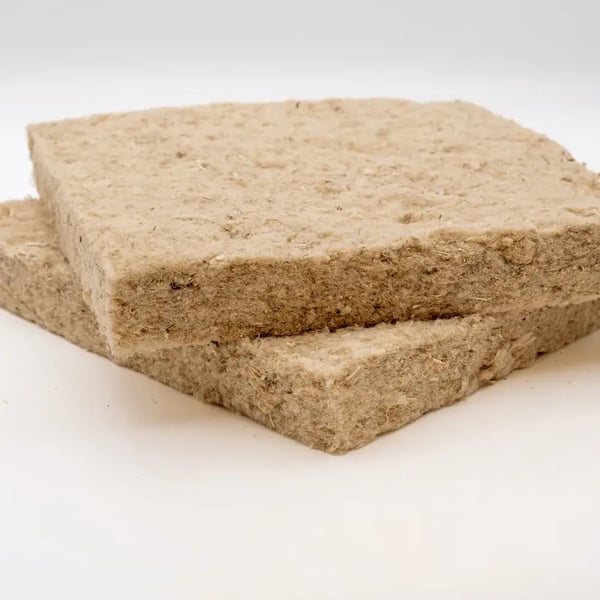
Dust is another critical factor for both animal and human respiratory health. Compared to loose straw, properly processed hurd-based nonwovens generate less airborne dust during handling and cleaning. We engineer mats to minimize fines, keep particle size within a target band, and support better air quality. That matters for sensitive species, show animals, and small pets.
Current applications in this space include nesting pads, cage liners, and absorbent inserts where hemp’s combination of absorption, odor control, and comfort provides a clear functional upgrade. For partners, the value comes from pairing that performance with a scalable, repeatable product they can run through existing packaging and distribution channels.
HEMP-BASED PANELS FOR ACOUSTIC, BUILDING, AND INDUSTRIAL USE
Beyond bedding, hemp hurd plays an important role in acoustic, building, and industrial panels. Global research shows hemp can replace a portion of wood particles in boards while maintaining bending strength and internal bond, and improving thermal conductivity and moisture buffering. That makes hemp-based panels attractive for interior acoustic treatments and envelope components.
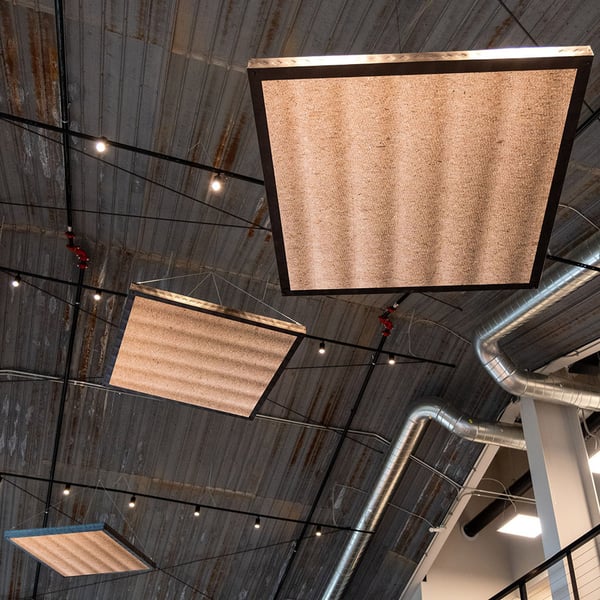
In our facility, we develop nonwoven panels that can serve as stand-alone acoustic products or as core materials within a larger assembly. For example, a wall or ceiling panel designer might specify a hemp-based nonwoven with a target airflow resistivity to absorb speech frequencies in offices or classrooms. Using airlay technology, we can build that panel with a blend of hemp and other fibers, then calibrate density and thickness for both sound absorption and weight constraints.
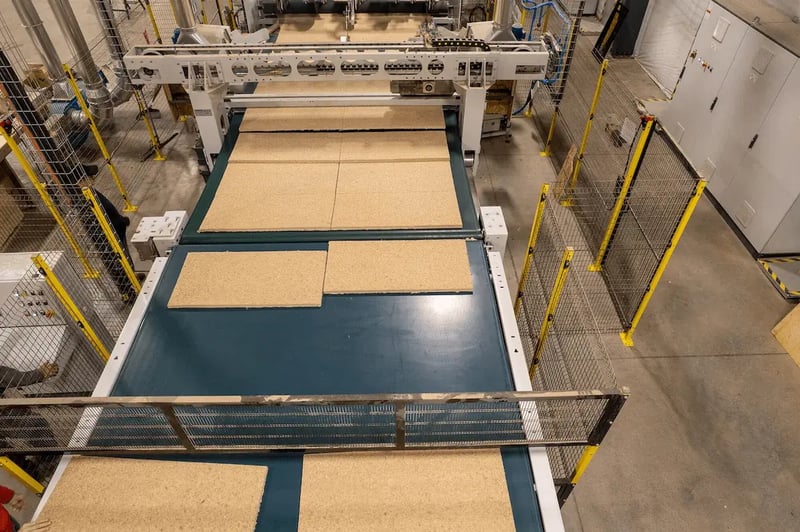
On the construction side, our materials can act as components in hemp-based insulation systems, underlayment, or composite structures. While we are not pouring hempcrete on site, we do support partners developing fiber-based layers that complement hempcrete or other natural building products, such as acoustic backings or thermal liners. Industrial OEMs can also integrate hemp-based nonwovens into equipment housings, transportation components, or enclosures where sound damping and lightweighting matter. Reach out to our team to learn more.
Because every application faces different regulatory and testing requirements, we work with partners to define the right validation plan. That can include acoustic lab testing, thermal conductivity measurements, or mechanical testing on laminates. The result is a fiber-based panel that ties laboratory performance to real-world fabrication needs.
HEMP IN LANDSCAPING, SOIL HEALTH, AND PROTECTIVE PACKAGING
In landscaping and horticulture, hemp hurd supports soil health and erosion control while reducing reliance on plastics and synthetic geotextiles. Hemp breaks down naturally, returning carbon and nutrients to the soil, and can serve as a mulch, erosion-control filler, or structural layer within a biodegradable mat.
At Green Fox Manufacturing, we use hemp and other fibers to create erosion-control and horticultural mats tailored to site conditions. For example, a sloped roadside might require a heavier-weight mat with defined tensile strength to hold seed and soil in place through storm events. We can adjust fiber blends, binder content, and thickness so the mat stabilizes soil long enough for vegetation to establish, then gradually degrades instead of leaving plastic fragments behind.
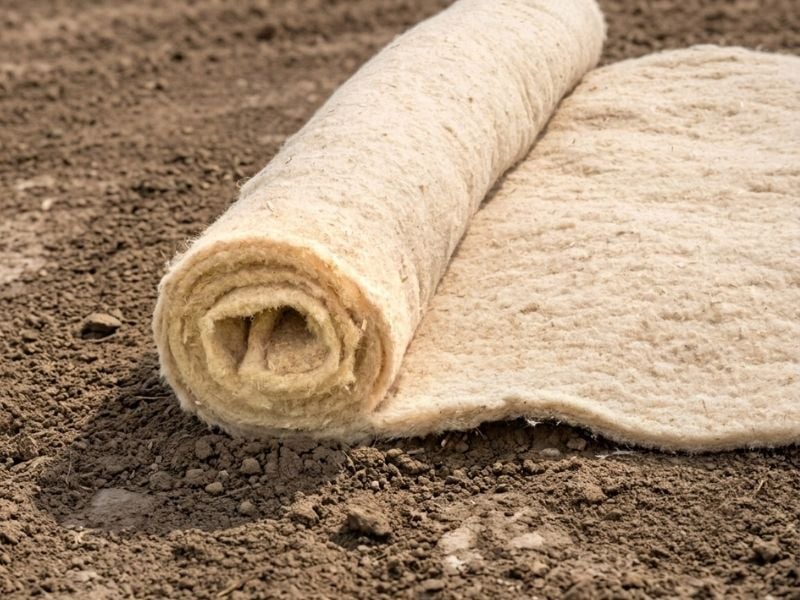
The same material logic applies to emerging protective packaging applications. Brands looking to move away from foam or purely plastic-based cushioning are exploring hemp-based nonwovens that combine shock absorption with curbside-recyclable or compostable designs. A molded or die-cut pad made from hemp and cellulose can protect a product in transit while aligning with sustainability commitments.
Because we operate in the upper Midwest, we also design with real climate stresses in mind: freeze-thaw cycles, heavy rain, and wide temperature swings. That experience helps us fine tune products for field durability without overengineering them beyond what the environment actually requires.
HOW TO CHOOSE THE RIGHT MANUFACTURING MODEL
For many teams, the biggest barrier to adopting hemp is not interest, it’s figuring out how to move from idea to manufacturable product. Green Fox Manufacturing is built around three engagement models so you can plug in at the stage that matches your needs and internal resources.
If you have an application concept but not a finalized material design, an OEM-style or white label engagement is often the best fit. In that model, we help define fiber blends, basis weights, and product construction, then manufacture the material for integration into your product or sale under your brand. You benefit from our process expertise and controlled hemp supply while retaining control of the end customer relationship.
If you already have detailed specifications and primarily need a manufacturing partner, co-manufacturing may be more appropriate. We run to your design using our hemp fibers and focus on quality, throughput, and cost.
For teams that want to keep full ownership of product idea and raw materials, a toll-processing model allows you to supply the concept and inputs while we provide the Cormatex airlay platform, labor, and process controls.
In every case, projects start with a fit conversation: your application, performance targets, sustainability goals, and commercial timeline. From there, we work together to outline pilot work, testing, and scalability.
Hemp hurd deserves more than a theoretical role in sustainability roadmaps. And with the right manufacturing partner, it can become a dependable, high-performance component in your next generation of products.
Custom Nonwoven Manufacturing: What You Need to Know Before Choosing a Partner
Choosing a custom nonwoven man …
Airlaid Manufacturing: How It Works and What It’s Used For
Nonwoven fiber-based materials …
How It's Made: Hemp Fiber Insulation
Hemp insulation manufacturing …