
Natural fibers can be transformed into a wide range of materials for animal care, acoustics, landscaping, and other industrial applications. One way manufacturers can turn these fibers into functional materials is through airlaid nonwoven manufacturing.
Airlaid technology allows individual fibers to be formed into a web and consolidated into a nonwoven material without weaving or knitting. By selecting different fibers, creating custom blends and adjusting material specifications, manufacturers can develop airlaid nonwovens for a variety of end uses.
At Green Fox Manufacturing, we specialize in custom airlaid nonwoven manufacturing using natural fibers including hemp, flax, cotton, cellulose and wood fiber. We can also work with custom fiber blends and customer-supplied materials.
Learn more about what natural fiber nonwoven materials are, how airlaid manufacturing works, the types of fibers that we use and the applications finished products are commonly applied.
WHAT ARE NATURAL FIBER NONWOVEN MATERIALS?
Natural fiber nonwoven materials are engineered materials made from natural or plant-based fibers that are formed and consolidated into a cohesive structure without being woven or knitted. Traditional woven textiles are created by interlacing yarns where nonwoven materials are manufactured directly from fibers. This gives manufacturers flexibility to work with different fiber types and formulations while designing materials around specific application requirements.
Airlaid manufacturing is one process of turning natural fibers into finished products for industrial applications. Green Fox Manufacturing can manufacture airlaid nonwovens into a variety of mats, pads and panels, with material characteristics tailored to the intended application.
WHAT IS AIRLAID NONWOVEN MANUFACTURING?
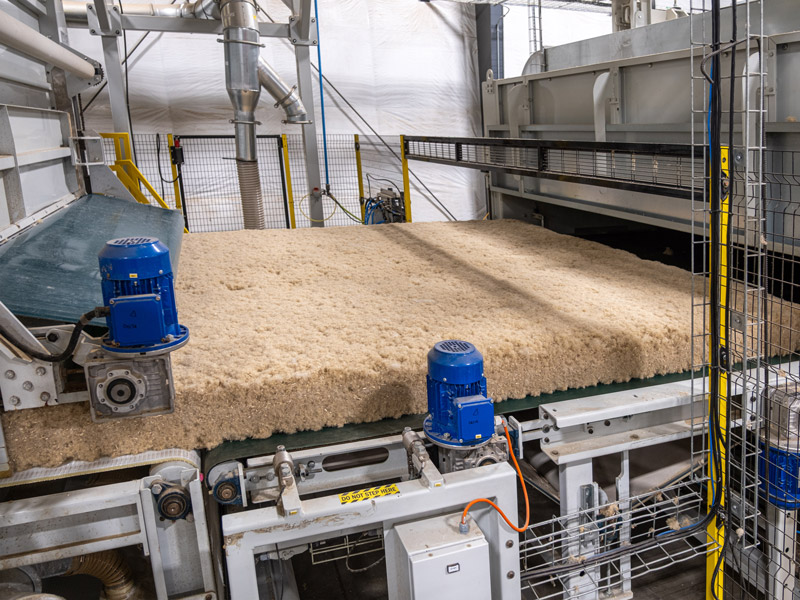
Airlaid manufacturing uses air to distribute individual fibers into a controlled web rather than weaving fibers together into a textile. These web formations are then consolidated into a cohesive nonwoven material.
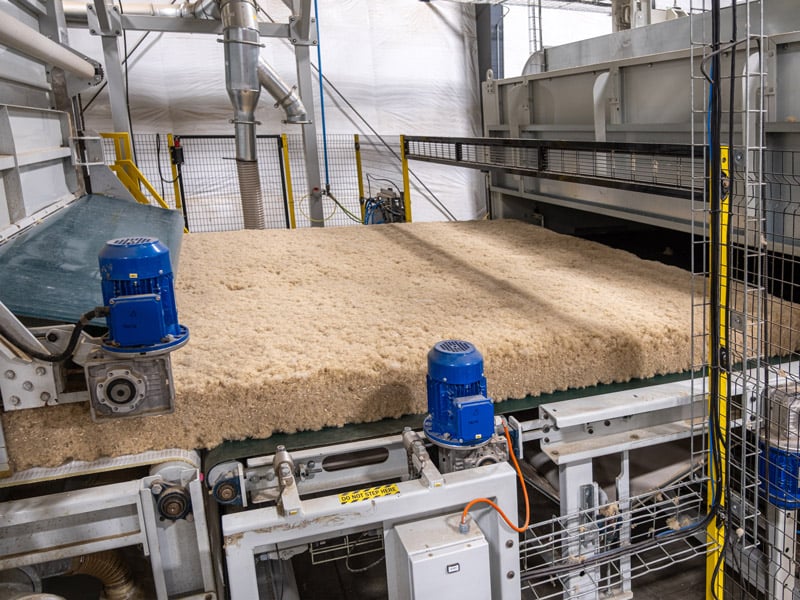
This process allows us to work directly with individual fibers and custom fiber blends while providing flexibility during product development with different formulations, densities and physical characteristics.
WHY USE AIRLAID MANUFACTURING FOR NATURAL FIBERS?
One of the advantages of airlaid manufacturing is its flexibility. Different natural fibers have different characteristics, and the requirements of a finished product can vary significantly from one application to another. Our airlaid manufacturing platforms allows us to adjust the fiber formulation and material construction around those requirements.
Depending on the application, Green Fox Manufacturing can work with variables like:
- Fiber type
- Fiber blend
- Fiber distribution
- Material density
- Thickness
- Rigidity
- Weight
- Overall material structure
NATURAL FIBERS GREEN FOX MANUFACTURING WORKS WITH
Hemp Fiber
Green Fox Manufacturing produces a variety of established hemp-based nonwovens. Hemp is a versatile, renewable plant-based fiber that can serve a wide range of applications from acoustic sound management to erosion control.
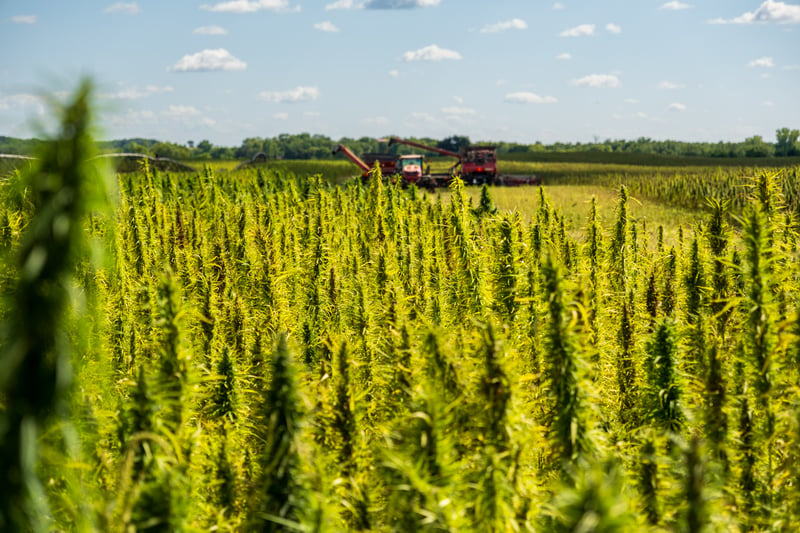
The industrial hemp we use in production is grown on our Central Minnesota farm and processed at our manufacturing facility down the road. Being a part of the supply chain gives us first-hand experience with the material from agricultural production through processing and manufacturing.
Flax Fiber
Flax is another plant-based fiber that Green Fox Manufacturing grows and processes for use in our airlaid nonwoven manufacturing. Depending on the desired characteristics of the finished material, flax can be used independently or incorporated into a custom fiber blend.
Cotton Fiber
Cotton is a widely used natural fiber that can also be incorporated into our airlaid nonwoven formulations. Its established use across a variety of products makes it a familiar material for manufacturers exploring natural fiber applications. Cotton can also be combined with other fibers when a specific formulation is desired.
Cellulose Fiber
Cellulose is a naturally occurring component of plant matter and is found throughout the plant world. Cellulose-based fibers can be incorporated into airlaid nonwoven formulations and combined with other fibers depending on the intended application and desired material characteristics.
Wood Fiber
Wood fiber is another fiber source for Green Fox’s airlaid manufacturing capabilities. Depending on the fiber characteristics and application, we can use wood fiber independently or as a blend with other natural fibers.
Natural Fiber Blends
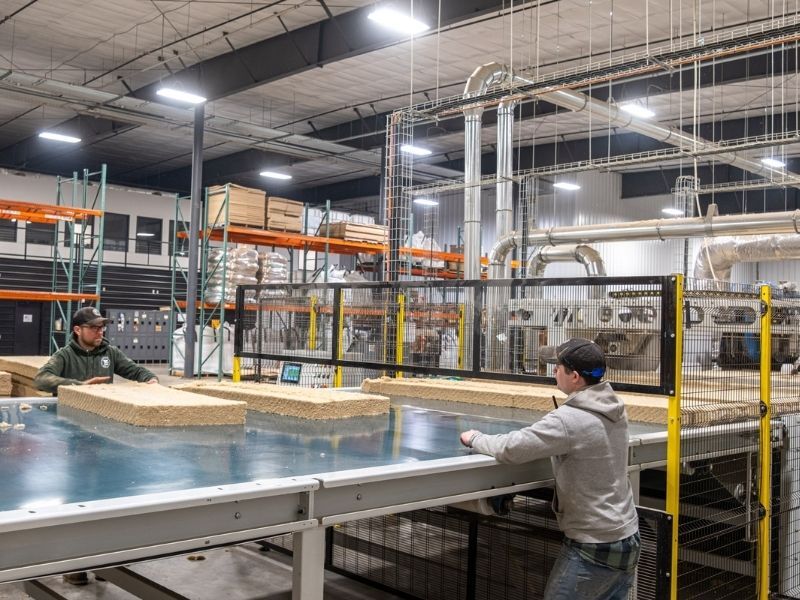
Our Cormatex airlay manufacturing line can also accommodate custom fiber blends, allowing the combination of different materials within one single nonwoven formulation. A custom blend might include hemp, flax, cotton, cellulose or wood fiber. The specific combination depends on the requirements of the finished material. Green Fox Manufacturing can help assist in blend formulation and testing before moving into production.
WHERE ARE AIRLAID NATURAL FIBER NONWOVENS USED?
The flexibility of airlaid manufacturing allows natural fiber nonwovens to serve a range of industries and applications. At Green Fox Manufacturing, our capabilities support applications across acoustics, animal care, erosion control, and horticulture.
Acoustic Materials
Airlaid manufacturing can be used to produce acoustic panels for interior sound management. Material specifications such as density, thickness and rigidity can be customized based on the requirements of the finished product.
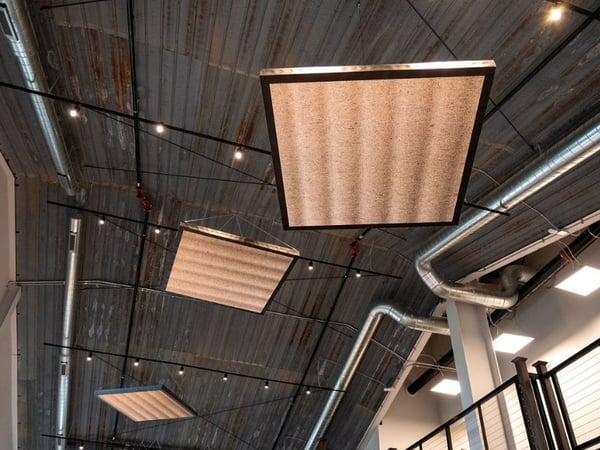
Green Fox Manufacturing uses hemp fiber to produce high-density acoustic panels for white label opportunties. We also work with companies who are looking for a custom fiber blend and specific finished product characteristics.
Animal Care Products
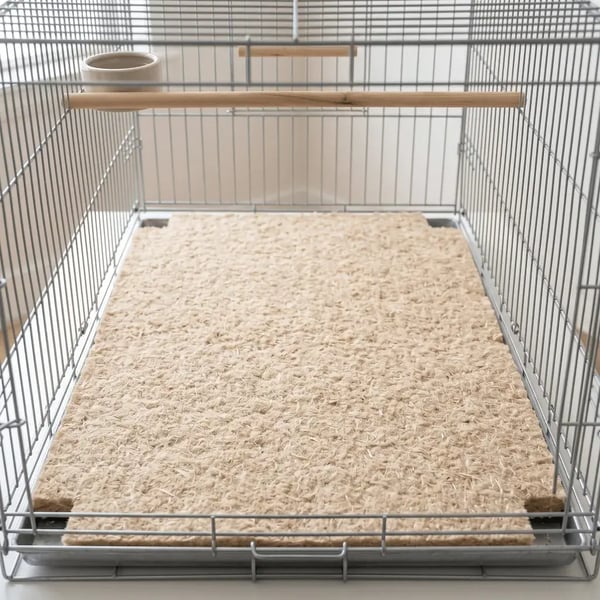
Airlaid nonwovens can also be used in animal care applications including nesting pads and cage liners. Depending on the application, materials can be engineered around absorbency, structure and durability. Our airlay manufacturing line provides a consistent manufacturing platform for converting natural fibers into purpose-built animal care materials.
Erosion Control
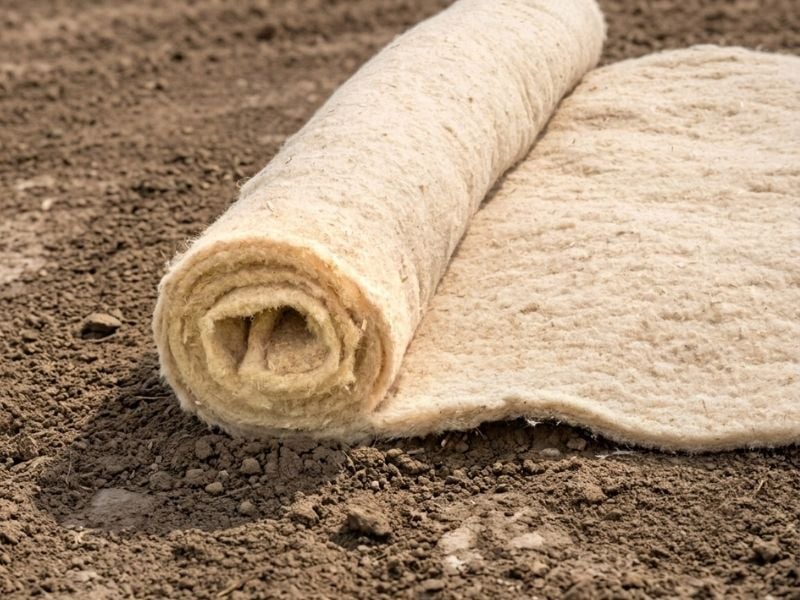
Natural fiber airlaid materials can be manufactured into erosion control blankets, mats and other structures for large outdoor applications. Fiber selection, density, and construction can be adjusted and designed to help protect soil surfaces.
Horticulture
Airlaid natural fiber materials can also serve agricultural and horticultural applications. Depending on the formulation and construction, nonwoven grow mats or soil discs can be developed for moisture management, soil protection and weed suppression.
Custom Applications
Not every natural fiber nonwoven application fits neatly into an established category. You may come to us with a new product concept, existing material, or specific performance requirement that requires a custom solution. Green Fox Manufacturing is here to provide a flexible platform for evaluating different fibers, blends and material specifications.
CUSTOM AIRLAID NONWOVEN MANUFACTURING
Natural fibers provide the start to any new material. Airlaid manufacturing technology provides the process for turning those fibers into functional nonwoven products. Green Fox Manufacturing specializes in custom airlaid nonwoven manufacturing using:
- Hemp
- Flax
- Cotton
- Cellulose
- Wood fiber
- Custom fiber blends
- Customer-supplied fibers
Our airlaid capabilities allow us to develop mats, pads and panels with customized fiber formulations and material specifications for a range of applications. We also bring expertise from agricultural production and fiber processing to manufacturing, packaging, storage and fulfillment thanks to our vertically integrated supply chain.
Whether you're developing a new natural fiber product, looking for a U.S.-based manufacturing partner, or exploring a new application for an existing material, Green Fox Manufacturing can help you explore the possibilities of airlaid nonwoven manufacturing.
How Green Fox Manufacturing Supports Toll Processing Needs
For companies working with spe …
Custom Nonwoven Manufacturing: What You Need to Know Before Choosing a Partner
Choosing a custom nonwoven man …
Airlaid Manufacturing: How It Works and What It’s Used For
Nonwoven fiber-based materials …